Table of Contents
- What Makes a Reservation-Only Photo Encounter Different
- What to Expect During a Private Safari Photo Encounter
- Private Safari Photography Tours Tanzania: Choosing the Right Operator
- How to Book a Private Safari Encounter: Step-by-Step
- Pricing, Inclusions, and What Drives the Cost
- Preparation, Packing, and Accessibility for Every Guest
- Conservation, Animal Welfare, and the Ethics of Wildlife Photography
- Frequently Asked Questions
Last Updated: September 24, 2026
What Makes a Reservation-Only Photo Encounter Different
A reservation-only safari photo encounter is a private, pre-booked wildlife photography experience limited to your own group, with no walk-in guests and no shared vehicles. The Whispering Acacia is a boutique bushcamp located in the heart of Tanzania’s Tarangire National Park, offering an intimate and immersive safari experience.
Most safari lodges fill vehicles on a first-come basis. You book a bed, not an experience, and you photograph whatever the group schedule allows. Reservation-only encounters flip that. Your vehicle, your ranger, your pace.
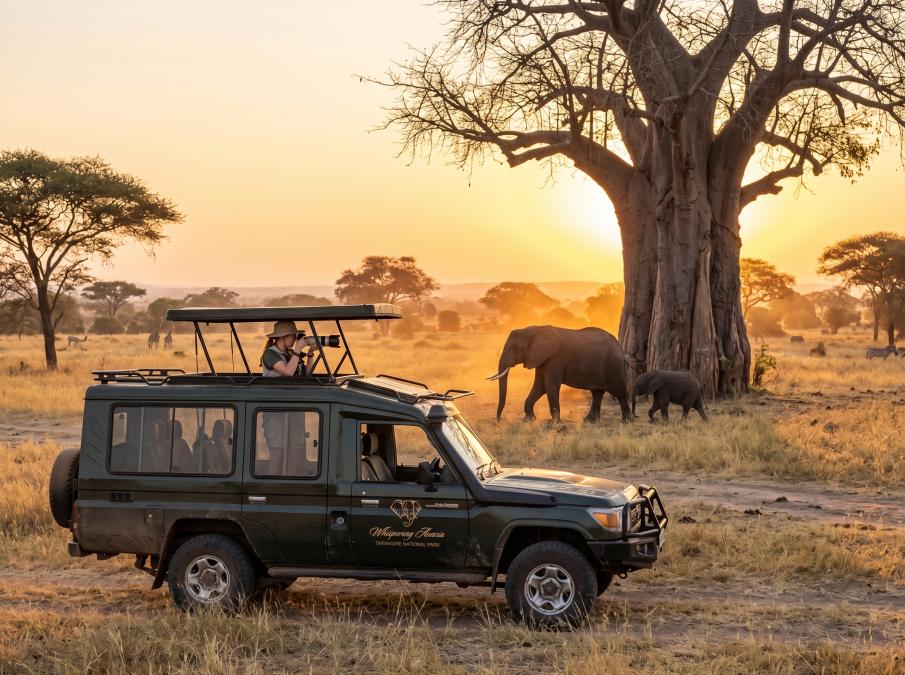
Tarangire National Park itself rewards this approach. The park is famous for its elephant herds and its baobab-dotted plains, and the light at dawn and dusk turns those landscapes into some of the most photographed scenery in northern Tanzania. According to Tanzania National Parks official park information, Tarangire covers roughly 2,850 square kilometres and hosts one of the densest elephant populations in the country.
What that means in practice: a private booking removes the two things that ruin wildlife photography, other people’s schedules and engine noise.
What to Expect During a Private Safari Photo Encounter
Expect a slow, deliberate day built around light rather than a checklist of animals. A private safari photo encounter typically runs from a pre-dawn departure through a mid-morning break, then resumes in the golden hours before sunset.
Your ranger reads the bush, not a script. When a leopard settles in a tree, you stay. When the herd moves, you follow. There is no fixed route and no rush to the next sighting.
Guests often ask how a smaller camp delivers something deeper than the big names. The Whispering Acacia specializes in thoughtfully tailored, private journeys that move away from crowded game drives to focus on the rhythm of the wild and the unique interests of each guest.
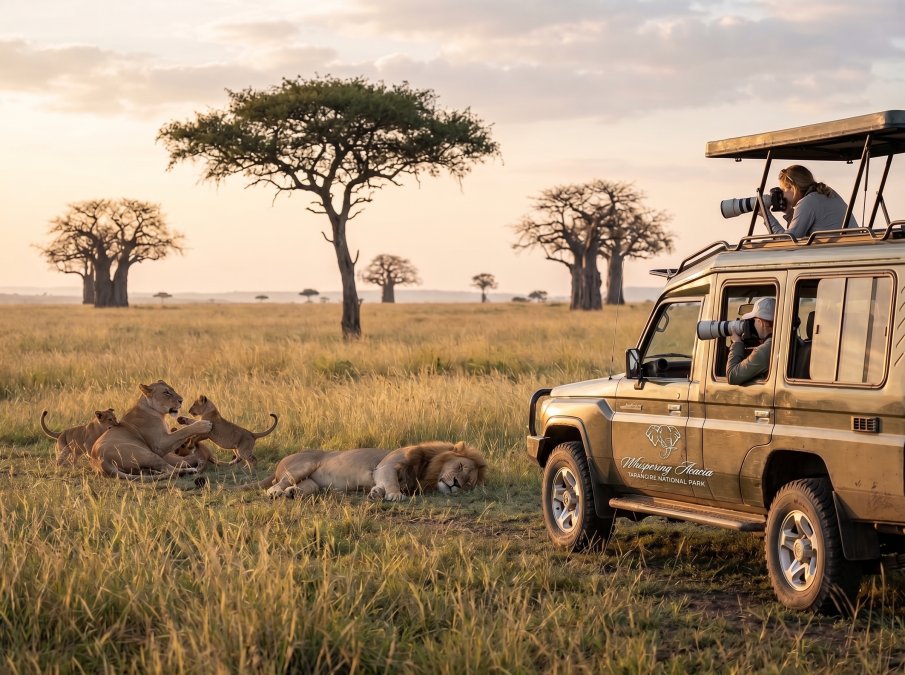
A small group of guests in an open safari vehicle at golden hour in Tarangire National Park, using long-lens cameras to photograph Lions among baobab trees, with no other vehicles in sight
A Typical Day in Tarangire National Park
A typical day starts before sunrise with coffee and a briefing, followed by a drive into the park as the light breaks. Midday is for rest, reviewing images, and a long lunch back at camp. The afternoon drive runs until the light fades, often ending with sundowners overlooking the plains.
Private Safari Photography Tours Tanzania: Choosing the Right Operator
Choosing the right operator comes down to three things: group size, guide expertise, and whether the itinerary is genuinely flexible. The Whispering Acacia offers private, non-fixed itineraries tailored to individual interests, with expert rangers who act as storytellers of the land.
Ask directly about vehicle exclusivity. Ask how routes are decided each morning. Ask what happens when a sighting is exceptional and the clock says it is time to move on.
For guests who want the full picture of what a guided experience involves, responsible tourism guidance from the UN World Tourism Organization is a useful reference for how ethical operators structure wildlife experiences.
How to Book a Private Safari Encounter: Step-by-Step
Booking a reservation-only photo encounter is less like buying a tour and more like commissioning a private guide. The sequence matters, and the details you confirm in writing at each stage determine whether the experience you paid for is the experience you get.
1. Choose your dates and season. In Tarangire, the dry months from roughly June through October concentrate wildlife around the Tarangire River and its scattered waterholes, which is when elephant herds and predator sightings are most reliable. The short rains (November-December) and long rains (March-May) bring green landscapes, fewer vehicles, and dramatically lower rates, but also muddier tracks and more dispersed animals.
Comparing Encounter Tiers: What You Are Actually Reserving
Most operators blur the difference between a shared game drive, a private vehicle, and a true reservation-only photo encounter. The table below clarifies what each tier typically includes so you can match the booking to your intent.
Tier | Vehicle | Guide | Route | Other Guests | Best For |
|---|---|---|---|---|---|
Shared game drive | Shared | Shared | Fixed | Yes | First-time visitors, budget travel |
Private vehicle add-on | Exclusive | Shared or private | Semi-flexible | No | Couples, small groups wanting privacy |
Reservation-only photo encounter | Exclusive | Dedicated photo ranger | Fully flexible, light-led | No | Serious photographers, multi-day projects |
Reservation-Only vs. Walk-In: What Changes at the Gate
A reservation-only encounter is not simply a pre-paid tour. It changes what happens at the park gate and on the track. Walk-in guests at larger lodges are pooled into vehicles based on availability that morning, which means departure times, route choices, and how long you stay at a sighting are decided by the group, not by you. A reservation-only booking inverts that: your vehicle is allocated before you arrive, your ranger knows your photography priorities in advance, and the day’s route is set by light and wildlife movement rather than by a lodge schedule.
Pricing, Inclusions, and What Drives the Cost
Reservation-only photo encounters are priced per vehicle, not per seat, which is the single fact that explains most of the cost difference between them and a standard lodge game drive. Once you understand that, the rest of the pricing becomes predictable.
The Main Cost Drivers
Season. Peak dry season (roughly July-October) carries the highest park fees and the highest demand, and small bushcamps with limited vehicles sell out first. Green-season travel (March-May) can reduce nightly rates substantially, but you trade reliable sightings for lush landscapes and quieter tracks.
What a Reservation-Only Encounter Typically Includes
While exact inclusions vary by operator, a genuine reservation-only photo encounter usually covers:
- Exclusive use of an open safari vehicle and a dedicated guide or photo ranger
- Park entry and conservancy fees for the agreed itinerary
- Meals and drinking water during the experience
- Flexibility on departure times and route, within park rules
- Assistance with camera setup, positioning, and light management
Why Fixed Rates Are Rare
Small, reservation-only bushcamps rarely publish fixed rates because every itinerary is built around the guest. Two bookings on the same dates can differ in cost based on vehicle allocation, guide assignment, and included experiences. The honest answer is that the only accurate figure comes from a tailored quote, and a good operator will break that quote down line by line so you can see exactly what you are paying for.
A Note on Value vs. Price
The cheapest private vehicle is rarely the best value for a photography trip. What you are really paying for is time, time at a sighting without a schedule, time with a ranger who knows where the light falls, and time to wait for behaviour rather than rush the shutter. When comparing quotes, weigh the number of guaranteed game-drive hours, the guide-to-guest ratio, and whether the vehicle is genuinely exclusive.
Preparation, Packing, and Accessibility for Every Guest
Preparation separates a good photographic trip from a frustrating one. Pack for early starts and dusty roads, and bring more memory and battery capacity than you think you need.
A practical packing list:
- A camera body with a telephoto lens for distant wildlife
- Spare batteries and a charger for long days
- Extra memory cards for high-volume shooting
- A dust cover or cloth for the vehicle and lenses
- Neutral-coloured layers for cool mornings and warm afternoons
- Sun protection, a hat, and refillable water
- Any personal medication and a basic first-aid kit
Conservation, Animal Welfare, and the Ethics of Wildlife Photography
Ethical wildlife photography protects the animal first and the photograph second. That principle should shape every decision, from how close you drive to whether you use a flash.
Frequently Asked Questions
What makes a private safari photo encounter different from a standard game drive?
A standard game drive follows a fixed route with a shared vehicle and a set schedule. A private safari photo encounter is built around your interests, your pace, and the light. Your guide can wait 40 minutes at a single sighting if the composition is right, reposition the vehicle for a cleaner background, or skip a crowded area entirely. The focus shifts from ticking off species to making deliberate, high-quality images of animal behaviour in good light.
Do I need to book my safari photography experience in advance?
Yes. Reservation-only camps and photo encounters in Tarangire National Park operate on limited vehicle and guide capacity, and peak season between June and October fills months ahead. Booking early also lets you discuss your photography goals, preferred species, and daily rhythm before arrival, so the itinerary is shaped around you rather than adjusted on the spot. Contact the camp directly to check availability for your dates.
What equipment is recommended for a boutique safari photo encounter?
A DSLR or mirrorless body with a 100-400mm or 200-500mm zoom covers most sightings, plus a wide-angle for landscapes and camp scenes. Bring spare batteries, more memory cards than you think you need, a dust blower, and a beanbag for resting the lens on the vehicle rail. A monopod helps with heavy glass. If you shoot on a phone, a small clip-on telephoto and a stable grip still produce strong images in good light.
How does a reservation-only policy enhance the wildlife viewing experience?
Reservation-only means the camp knows exactly who is on site and how many vehicles are out at any time. That limits crowding at a sighting, protects sensitive areas from repeated traffic, and lets guides plan routes around animal movement rather than around other tourists. For photographers, the practical result is cleaner backgrounds, calmer subjects, and more time in position before the light changes.